Artist Running Out of Room With All of My Art
What makes some artists famous and others fade into obscurity? The most famous artists are the ones that capture a time, a place, an thought or spear head a new creative motion.
Our list of artists contains some of the near genius minds to ever exist.
Their art has stood the exam of time and adorn galleries the world over with many of their works worth hundreds of millions of dollars on the rare occasions that they come up for auction.
Famous Artists
1. Leonardo Da Vinci
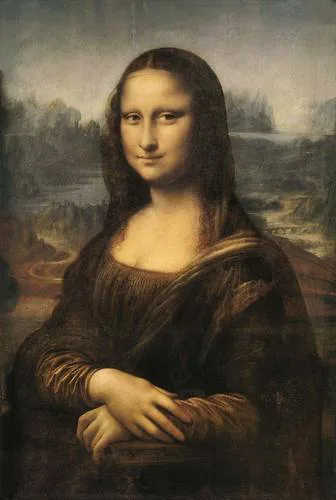
Very few artist names are more recognizable than da Vinci he towers higher up all other artists with a seemingly endless almost supernatural talent.
Leonardo da Vinci, whose interests encompassed everything from painting to architecture, anatomy, and engineering science epitomized the renaissance human.
Due to his many endeavors and despite his fame, da Vinci did not produce that many works throughout his lifetime, having less than two dozen paintings surviving over the centuries, just his love of science permeated his artistic work (e.g.Vitruvian Human being).
Born in 1452 Tuscany, Italian republic, da Vinci showed an early aptitude for art despite a short formal education.
Around fourteen years old, he apprenticed under Andrea del Verrocchio in Florence where he studied subjects like carpentry and drawing.
By twenty years onetime he qualified every bit a primary artist at Florence's Social club of Saint Luke where he established his own workshop but continued his apprenticeship with del Verrocchio for several more years.
After a successful painting career and paralysis of his left paw, da Vinci focused his later years on scientific studies until his death in 1519.
ii. Michelangelo
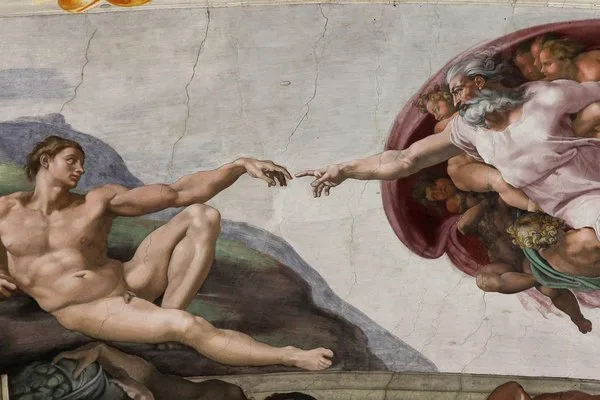
Michelangelo Buonarotti was regarded every bit i of the greatest artists of all time even while he was however alive.
Although he thought of himself as a sculptor, his creative talents spread to painting, architecture, and fifty-fifty poesy, merely sculpture was the one art form that remained a constant throughout his career.
Born in 1475, Michelangelo was less interested in formal schooling and more interested in church paintings from an early historic period. Past the time he was thirteen, he began an apprenticeship with Domenico Ghirlandaio.
While it was supposed to last three, it ended after just one year because he had already learned all he could from Ghirlandaio, moving on to join the Humanist Academy in Florence.
After completingDavid in 1501, he secured himself as a respected artist and gained notoriety, leading to a successful career. Towards the end of his life, he abased his artistic ventures for compages until his death in 1564.
iii. Rembrandt
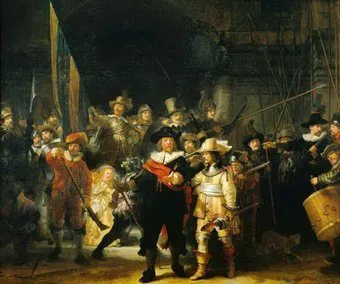
Rembrandt Harmenszoon van Rijn, or Rembrandt, was built-in in 1606 in modern solar day Netherlands. As a principal in visual arts, he is widely renowned as both a artist and print-maker.
Though he painted a wide breadth of discipline matter, he was particularly fond of self portraits as well as biblical scenes. He is credited as one of the greatest artists of all time.
At fourteen years one-time, Rembrandt apprenticed Pieter Lastman in Amsterdam for six months. After, he opened his own studio in Leiden where he took on numerous pupils.
Though he made more than a pocket-size income, he spent his money with wild abandon, leaving himself penniless near of his life.
Thankfully, he spent his coin on art which mostly appreciated in value, allowing him to avert bankruptcy past selling the fine art he had caused over the years. Eventually he passed away every bit a poor man in 1669.
iv. Vermeer
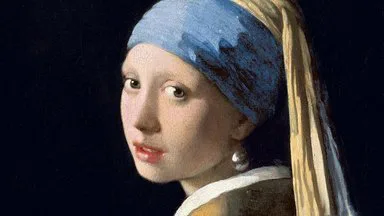
Johannes Vermeer, built-in in 1632 Holland, was a bizarre artist known for his masterful use of pigments and light.
Although he enjoyed painting biblical and mythological scenes, he specialized in painting domestic interior scenes of the centre class lifestyle, ofttimes depicting the aforementioned scenes and individuals in multiple paintings.
1 aspect of his painting that separates him from his contemporaries was his excessive apply of expensive paints without concern in conjunction with his lack of preparations for each of his paintings.
Much of Vermeer'southward life is left unsure, including whom he apprenticed nether. Additionally, just 30-iv paintings are attributed to him today.
However, it is known that in 1653 Vermeer became a master, though he did not achieve broad success until afterwards his death in 1675 where he has been known as one of the most famous painters of the dutch golden age.
5. Picasso
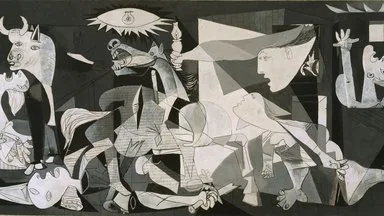
Pablo Picasso, built-in in 1881 Malaga, Spain, is one of the most esteemed artists, in add-on to printmaker, poet, and playwright, in history.
Throughout his life, he changed techniques several different times, making it difficult to pinpoint what his trademark style was.
In his early on years, his paintings depicted colorful scenes of blue hues, whereas later it turned to blue-green hues that oftentimes depicted scenes of impoverished peoples.
Built-in the son of a artist, Picasso's begetter taught him what he knew until Picasso had surpassed him. At fourteen years sometime, his family moved to Barcelona and he was accepted to the local fine arts school despite his historic period.
Afterwards becoming political during World War II, he eventually enjoyed a very successful career where he achieved international success until he died of heart failure in 1973.
6. Monet
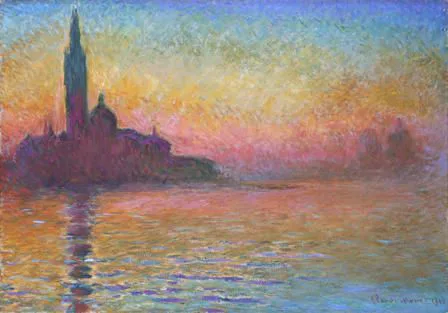
Claude Monet was 1 of the founders of the impressionist motility, coining the term from his painting Impression, Sunrise.
His subject thing always centered on land and seascapes with his virtually fond subject area being the French countryside.
Often, he would paint the same scene over many times to capture the changing of seasons. Withal, he also painted portraits, most notably of his married woman Camille Doncieux inThe Woman in the Light-green Wearing apparel.
Born in 1840 Paris, French republic, he started with cartoon charcoal caricatures in his youth. He later learned painting and his outdoor painting fashion from his mentor Eugene Boudin.
Also Read: Drawing Ideas
While traveling as a kid, he met Edouard Manet, another eventual impressionist. Later on returning from the military machine as an adult, he struggled for many years until he finally reached a successful career with the impressionist move.
He eventually died of lung cancer in 1926 at eighty-6 years former. Monet was one of the few impressionists that found commercial success while yet alive.
7. Van Gogh
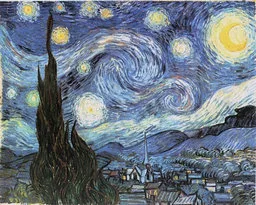
Vincent van Gogh, built-in in 1853 Netherlands, is 1 of the most prominent artists in history. With a big trunk of work, he created everything from landscapes, however life's, portraits, and cocky-portraits.
Born to a wealthy family, he spent his early on life as a missionary until pursuing painting when he was almost thirty.
Throughout his life, he was plagued past mental health issues, going in and out of psychiatric hospitals, 1 instance occurring later he severed his own ear which he is now infamous for. Eventually his mental health issues caught up to him and he died of suicide in 1890.
Ironically, Van Gogh became famous after his suicide, becoming a mythological effigy deemed as a tragic genius. His piece of work is largely characterized as neo-impressionistic with a strong use of vivid colors.
8. Edvard Munch
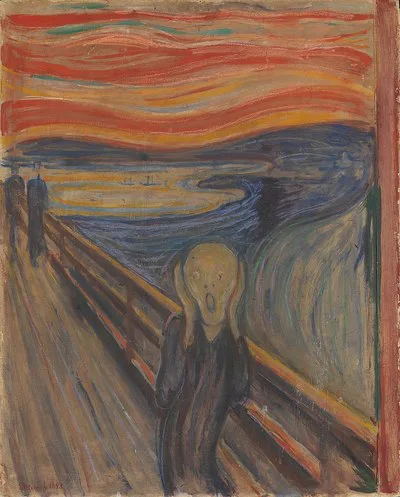
Edvard Munch was born in 1863 Kingdom of norway the son of a priest. Afterward enrolling equally an engineer in 1879, he learned scaling and how to depict until an illness disrupted his studies and he dropped out, later pursuing painting instead.
After a few years, he moved to Paris where he studied the impressionist mode and learned how to use their vivid color techniques. Struggling to find his own unique manner, he continually bounced between naturalism and impressionism throughout his adulthood.
Eventually, his paintings turned more symbolic than realistic, depicting the essence of emotions rather than individuals displaying emotions themselves. The last two decades of his life Munch spent isolated until he died in 1944.
Of all of his famous paintings it is his work chosenThe Scream, 1 of the most valuable paintings of all time representing the anxiety of the modern human. This work has 4 versions: 2 in pastels and two in paints.
9. Salvador Dali
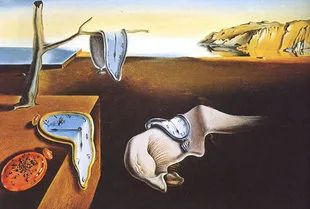
Salvador Dali, born in 1904 Spain, was a surrealist artist that diameter striking and bizarre images, often containing sexual and Freudian as well as mathematical and scientific elements. In addition to painting, he also pursued movie, poetry, sculpture, and graphic arts.
At fourteen years sometime, Dali attended the Municipal Drawing School at Figueres where he studied cartoon and later moved to Madrid to further his studies.
Early on on, his art was more in line with cubism and avant-garde styles just subsequently shifted to surrealism where he became a prominent figure. Afterwards moving effectually Espana and French republic, he somewhen moved to the United States where his career took off.
In 1980, Dali started to exhibit signs of Parkinsons, and, with the passing of his married woman Gala soon later, led to a halt in his artistic endeavors and a steady decline until his own expiry in 1989.
x. Andy Warhol
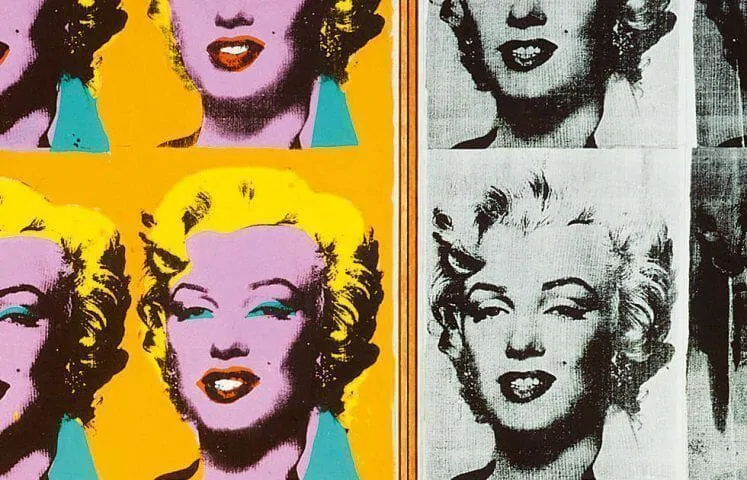
Andy Warhol, born in Pennsylvania in 1928, was a wildly controversial pop artist. His use of irony and popular elements in his art, fusing together the worlds of art, advertisement, and celebrities, was criticized equally a business concern move to make more than money rather than an artistic pick.
As a sickly child, Warhol spent a lot of time bedridden, to which he credited as a vital menses in forming his skills and creative expression.
Unlike a lot of other famous artists Warhol studied commercial art in high school, he then moved to New York City where he worked in mag analogy and advertizing and became known for his shoe designs.
His inflammatory drawings acquired his fine art to quickly become both popular and controversial.
Even more controversial was his studio, which housed drag queens and other queer individuals, and his personal life where he lived openly gay in a pre-Stonewall era.
Eventually he died due to post-operational complications in 1987.
xi. Henri Matisse
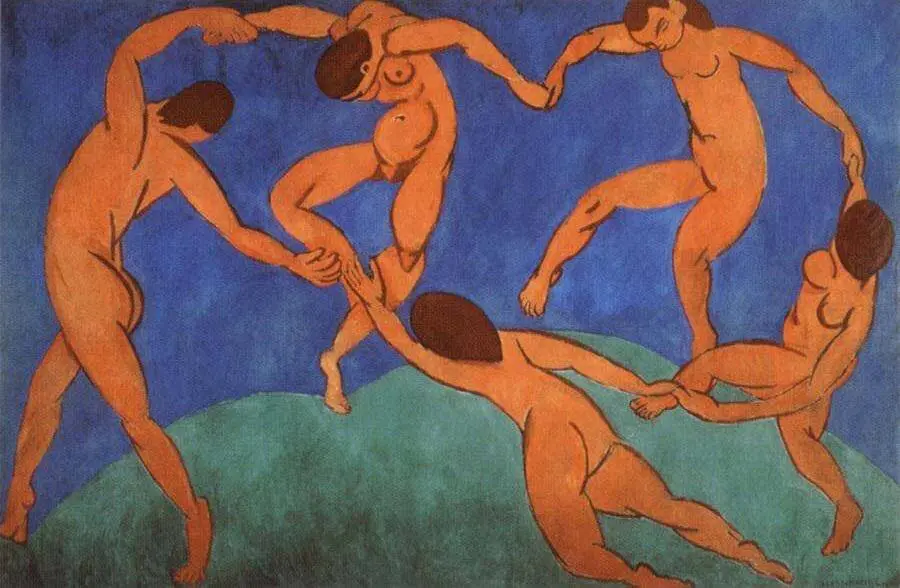
Henri Matisse was built-in in 1869 in the Due north of France and is known as beingness one of the leading members of the Fauvist art move of the early on twentieth century.
His art is best remembered for it's intense use of color and also for his very fluid draftsmanship. Although primarily famous as a artist he also produced piece of work in both impress and sculpture forms.
Although he qualified as a courtroom administrator after studying police force in Paris in 1887, in 1889 he started to paint while recovering from a bout of appendicitis at dwelling and and so made the rather unpopular decision to pursue fine art full time.
He returned to Paris in 1891 to study painting at the Académie Julian, where he studied nether William-Adolphe Bouguereau and Gustave Moreau.
Matisse'south classical style inverse dramatically subsequently obtaining a drawing of Van Gogh, this was the turning point in his evolution as an artist, gone where the more than traditional muted colors and in their identify a palette that was filled with color and vibrancy.
Along with Andre Derain he is credited equally being one of the leaders of the Fauvist movement that used oftentimes unnatural colors to brandish emotion.
Although Fauvism simply lasted a few short years Matisse unlike other artists of the genre connected to flourish.
His most recognizable piece of work "The Trip the light fantastic" is widely regarded as 1 of the most important paintings of the mod art motion.
12. Georgia O'Keeffe
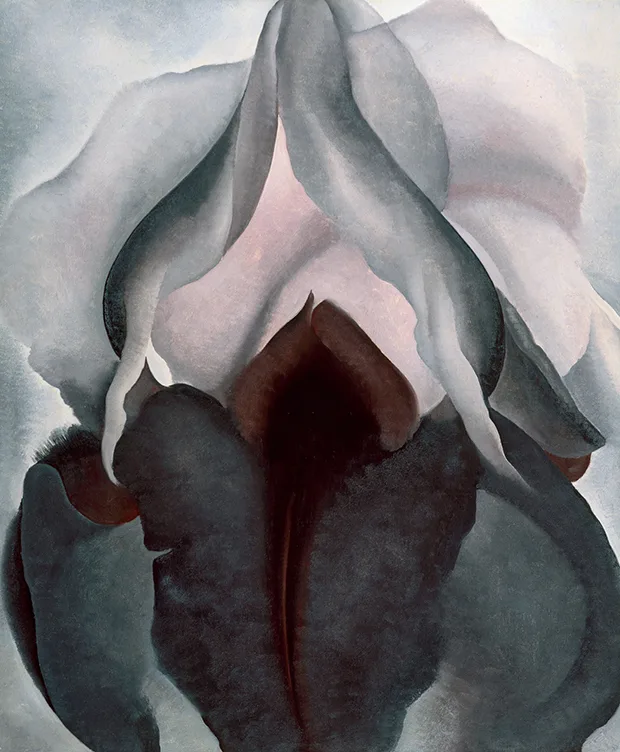
Georgia O'Keeffe was built-in in November 1887 in Wisconsin. Is is arguably 1 of the greatest female artists of all time and although her works would normally exist categorized as abstract in nature she is in fact quite difficult to necktie downwardly to any one art movement.
As a child she was encouraged strongly by her parents to pursue her artistic talents. Upon graduating high school she connected her fine art studies in the Fine art Institute of Chicago and the Art Students League in New York.
While attention both institutes she grew more and more uninspired by her instructors traditional leaning towards realism. After being exposed to oriental fine art he thoughts moved towards finding her own style and began to movement away from traditional art.
She created a small series of charcoal abstractions that found their way to New York and eventually into the easily of Alfred Stieglitz.
So taken was Stieglitz by the drawings that he exhibited them in his Manhattan art gallery in 1916 unbeknown to O'Keeffe.
The pair would somewhen see and fall in dear later on Georgia moved to New York. Finding herself completely uninspired by the vivid lights of the large city she began to find inspiration in the rural landscapes that she grew up in.
Her piece of work captured the beauty of the natural world and the rural American mural particularly in New Mexico.
13. Jackson Pollock
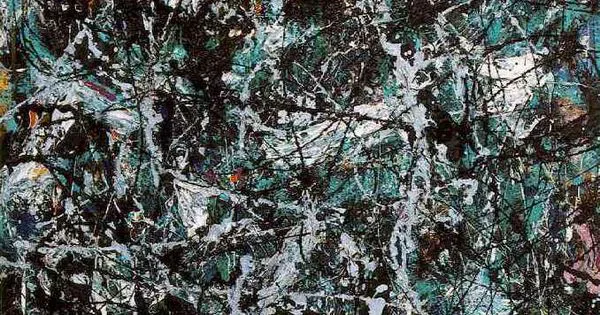
Jackson Pollock was born in 1912, he was a leading member of the abstruse expressionism movement and is best known for his Action Paintings usually referred to as drip or splatter paintings.
His drip paintings often used cheap wall paint over a black background. The cheaper pigment did non require thinning unlike more than expensive oil paints.
The paint would be dripped or splattered from above the canvas which was usually laid flat on the floor with the artist working above it.
Pollock only lived for 44 short years but his work would have a lasting issue on the world of art.
He was know to be a reclusive alcoholic and had a volatile temper, he death was the upshot of an booze related automobile crash in 1956.
14. Gustav Klimt

One of the most prominent leaders of the Art Nouveau movement, Gustav Klimt is well regarded. The bulk of his 55-yr life was spent in Austria, with a few trips to nearby nations like Italian republic in his latter years.
Klimt was already a well-known artist when the Art Nouveau mode emerged in the late 19th century, and his brilliant works, the majority of which depicted women, were well-known.
In the 1800s, many artists thought that Austria was stuck in a Classical aesthetic framework and civilisation, while other European countries were making tremendous breakthroughs in new and heady art forms.
The Vienna Secession was founded by Klimt and a few other artists in lodge to bring Austria into the modern European art scene.
With their astonishing realism and detail qualities, Klimt's paintings are widely recognized for being among of the best in the world.
It was during Klimt's latter years that he went through what art historians and critics refer to as his "Aureate Phase," in which magnificent golden gowns and the female person course were elevated in his works.
15. Edward Hopper

Born in New York on July 22, 1882 Hopper went on to go to the New York School of Art, where he learned how to paint. His goal was to spend the rest of his life painting.
Following his studies with Robert Henri, almost all of Hopper'due south fine art was about everyday images from city life. He talks well-nigh streets in cities, Victorian mansions, and abandoned flats, to proper name a few.
His work is known for evoking a sense of loneliness, but he used brilliant colors to make everyday landscapes more important. His best-known works are "Nighthawks," written in 1942, and "Early Sunday Morning," written in 1930.
The Modern Museum of Art and the Fine art Found of Chicago at present have some of the best art in the world.
Hopper died in 1967, simply his influence lives on through his nearly famous student, Robert Henri. He told his students to "make a disturbance in the world," which is what Hopper did.
It was Klimt and a few other artists who came up with the Vienna Secession in order to go Austria into the modern European art world today.
About of Klimt's paintings are known for their incredible realism and for the very unique features he used in many of his works, which make them stand out.
Klimt went through what art historians and critics telephone call the artist's "Golden Phase," during which he made a lot of works that used beautiful golden robes and celebrated the female person course.
16. Eugène Delacroix

Delacroix was born on April 26, 1798, and he lived until Baronial 13, 1863 he is primarily known every bit the leader of the French Romantic motility.
Delacroix was a big fan of the Venetian Renaissance and the work of Rubens, and he tried to use techniques that focused on color and movement.
Delacroix didn't like the strict rules of Greek and Roman classicism. He preferred his own fashion. Most of his style came from the N African fine art he saw while he was there.
Delacroix'southward paintings are known for their articulate depictions of powerful individual moments of emotion, which he thought should be shown with great accurateness.
With stiff brushstrokes and brilliant colors, he often paints images of things that are bad for the surround to show how he feels. To get the attention of the French Impressionists and symbolists, he used a lot of optical effects in his art work.
17. Paul Cézanne

Paul Cézanne was built-in in France in 1839. Many people recall he was one of the best Post-Impressionist artists.
He came upwards with new ideas and made some of the best art of the twentieth century.
Because of his work, the Cubist style of painting as well got a lot of help from him. Equally the son of a successful banker, he was expected to work in cyberbanking or a related field. However, he had always been interested in art.
To please his father, he went to police school. He didn't like it, and he was somewhen allowed to go to Paris to study painting.
He had mood swings and sadness, and when he found out that many of his classmates were meliorate at technology than he was, he was very upset.
He did, withal, come up with his own fashion. Throughout his life, his piece of work was often misunderstood and dismissed.
He kept trying to show who he was through his work and became one of the most important landscape artists of all time.
This collections of famous artists although not exhaustive covers the some of the about pop and hands recognizable names in the globe of art.
Many of the artists on this listing have a massive catalogue of artwork to their name and are responsible for some of the most iconic images ever produced.
Source: https://www.artst.org/famous-artists/
0 Response to "Artist Running Out of Room With All of My Art"
Post a Comment